|   | presented by  | Seven hundred and twenty-nine thousand people gone, a former central bank governor back in a cell, and a damning investigation into what's left of the south. Bonjourein — today's newsletter is heavy, but you should read it anyway. Lebanon deserves witnesses. |
|
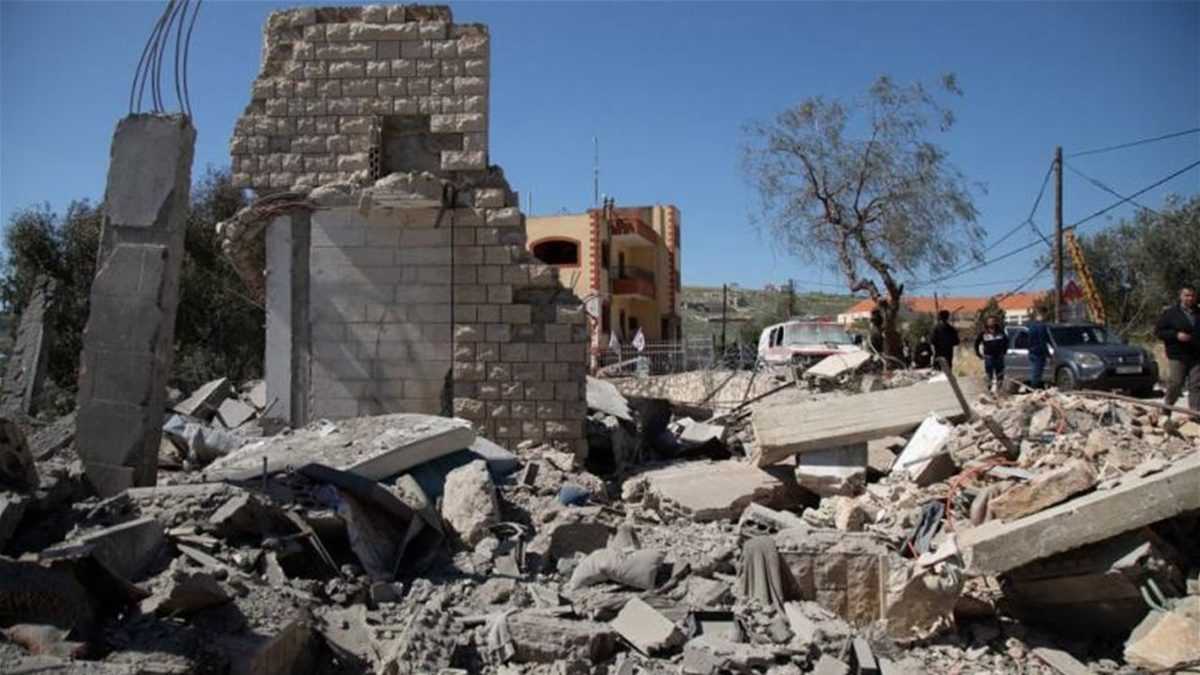
| | Financial Times Investigation: Israel Is Deliberately Making South Lebanon UnlivableWe've reported before on the scale of destruction in the south — the tens of thousands of damaged homes, the bulldozed villages. Now a joint Financial Times and Lighthouse Reports visual investigation puts the evidence in sharper focus: systematic demolitions, poisoned soil, and the explicit aim, say human rights lawyers, of making return impossible.
- Israeli Defense Minister Israel Katz boasted in July that his forces had destroyed all buildings in 24 Lebanese villages dating back hundreds of years — claiming up to 20,000 homes demolished, a figure that aligns with the upward revision from the 40,000+ total damaged units we reported previously, as the National Council for Scientific Research now estimates nearly 85,000 housing units damaged or destroyed across the south.
- The FT found evidence of controlled demolitions by Israeli forces and civilian contractors using heavy machinery — Caterpillar and Volvo equipment among them — targeting not just homes but schools, water pipelines, energy grids, and medical facilities.
- All bridges over the Litani River were destroyed; only two have been partially repaired. Israel has also been accused of spraying herbicides over more than 2,000 hectares of agricultural land and using white phosphorus in populated areas.
- Oxford law expert Janina Dill says blanket destruction under occupation law is virtually impossible to justify: "It is absolutely inconceivable that imperative military necessity would apply to every single house in a given village."
What to watch: With 270,000 residents still barred from returning to the 62 villages behind Israel's "Yellow Line," the legal and diplomatic pressure around accountability for systematic destruction is likely to intensify in coming months. Riad Salameh Detained — Again — After Fourth Arrest WarrantRiad Salameh ran Lebanon's central bank for 30 years and became a symbol of the financial system that collapsed in 2019. Since then, he's faced a cascade of criminal cases — and on Wednesday, after checking himself out of hospital to appear before a judge, he walked into detention.
- Investigative Judge Sheherazad Nasser questioned Salameh for more than three hours at the Beirut Palace of Justice, then issued an in-person detention order — the fourth arrest warrant of its kind against him since September 2024, according to L'Orient Today.
- The case stems from a BDL complaint filed in January involving financial operations linked to Bank Audi and the 2010 acquisition of roughly 11% of the bank's capital by brothers Nagib and Taha Mikati, financed in part by $300 million in loans from Bank Audi itself — with the central bank under Salameh allegedly giving the deal special treatment.
- Salameh's lawyer plans to appeal the warrant within 24 hours before the Beirut Indictment Chamber; a hearing for co-defendant and former Bank Audi CEO Samir Hanna is scheduled for August 20.
Why it matters: Each new warrant tightens the legal net around Salameh, and the BDL's own decision to file this complaint — the institution suing its former governor — marks an escalation in the accountability effort that Lebanese depositors have waited years to see. 729,000 Lebanese Left Since 2020 — and Most Aren't Coming BackEmigration has always been woven into the Lebanese story. But a new study by economist and former minister Charbel Nahas, drawing on General Security Directorate data through April 2026, puts a precise and alarming number on what's happened since the 2019 collapse.
- A net 729,062 Lebanese left between January 2020 and April 2026 without recorded return — roughly 20% of the country's population, and nearly four times the net outflow of 185,581 recorded between 2014 and 2019.
- The years 2022, 2023, and 2024 accounted for around 75% of that total outflow, with economic collapse driving early waves and the war of support accelerating departures more recently.
The bigger picture: A demographic shock of this scale — disproportionately draining young, skilled workers — risks locking Lebanon into a cycle where the people most needed for recovery are the ones least likely to be there for it. |
|
Building back home? Source it right.Renovating the family house or breaking ground on something new in Lebanon? Tchaghlassian Steel supplies what holds it together — stainless steel, aluminum, Rheinzink, ODE Starflex insulation, Seven ACP panels — to architects and contractors nationwide. One call and it's handled. |
as of 2:38 AM GMT · Source: Polymarket |
| | - School's out — forever: Israeli forces expanded demolitions in Zawtar al-Sharqiyah to include the public school, municipal building, dispensary, and daycare center, prompting the Lebanese Army to call the attacks a continuation of violations aimed at preventing residents' return. Education Minister Rima Karami condemned Israel for "erasing educational institutions from existence."
- Britain, Italy on the list: The shortlist for countries to verify Hezbollah's disarmament now has names: Britain, Italy, Switzerland, and Indonesia emerged from Rome talks, per Reuters. A sticking point remains Israel's demand that inspections include private homes — something the Lebanese army has firmly resisted.
- Phantom payrolls, real losses: Lebanon's National Social Security Fund uncovered 15 individuals fictitiously registered as employees of two companies, the latest in a string of fraud cases — a previous sweep found 73 ghost employees at two other firms. The scheme funnels undeserved health and social benefits out of a fund already stretched thin.
- Saida's economy fights back: Lebanon's Economic Bodies, led by former minister Mohammad Choucair, visited the Saida and South Chamber to coordinate recovery support for businesses hit by Israeli aggression. The meeting produced a plan to compile proposals for submission to government agencies and donor organizations.
- "Resemble your army": Army Commander General Rodolphe Haykal visited the Bekaa for live-fire training exercises with the Fourth Land Border Regiment, inaugurating a new operations room and a martyrs' memorial. His message to troops: "He who does not resemble his army does not resemble his homeland."
|
|
| ─ | Parallel Rate | 89,550 LBP | 0.00% | | ─ | Official Rate | 89,500 LBP | 0.00% | | ▲ | Gold | $4,467.2 | +1.92% | | ▼ | Bitcoin | $63,385 | -0.63% | | ▼ | S&P 500 | 7,748.5 | -0.06% |
as of 2:15 AM GMT · Source: lbprate, BDL, Yahoo Finance, CoinGecko |
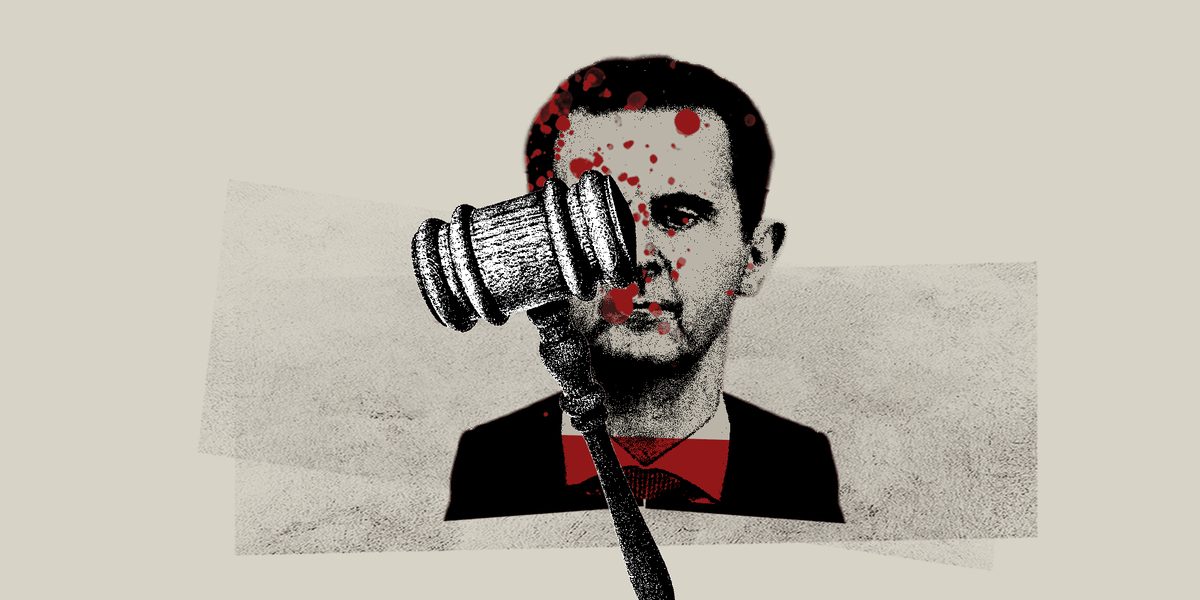
| | Damascus Sentences Assad to Death — But He's in MoscowSyria's new government issued a death sentence against former president Bashar al-Assad, his brother Maher, and security chief Atef Najib on August 11 — the first conviction of Assad from within Syria's own legal system since his regime collapsed in December 2024. Bashar and Maher were tried in absentia; Najib appeared in court. The ruling carries enormous symbolic weight for hundreds of thousands of victims, and equally enormous practical limits.
- All three were convicted of crimes related to murder, torture, and detention connected to the suppression of protests dating back to 2011.
- Assad remains in Russia, and serious extradition is considered unlikely under current circumstances.
- The death sentence may complicate future accountability: many countries do not extradite suspects to states where they face execution, and the Independent International Mechanism for Syria has stipulated it will not support cases that could lead to the death penalty.
- The court itself faces scrutiny — Human Rights Watch has documented violations linked to the judicial environment from which the presiding judge emerged.
What to watch: Whether Syria's new government pursues accountability for violations attributed to forces associated with the current authority will determine whether this verdict marks the start of transitional justice or its ceiling. UK Set to Ban Israeli Settlement Goods After Parliament's Summer RecessBritain's government under Prime Minister Andy Burnham is preparing to announce a package of new measures on Israel in September, including a ban on goods from illegal Israeli settlements in the occupied West Bank — a step several EU members have already taken but that successive British governments have stopped short of.
- Foreign Secretary Ed Miliband has been consulting civil society organizations on whether measures will include legal sanctions for companies with business links to settlements, per Middle East Eye.
- The previous Starmer government suspended around 30 export licences for UK-made arms and licensed $169 million in military goods to Israel; banning further exports is now under discussion, though no decisions have been made.
- UK-made components account for 15% of every F-35 fighter jet — a figure that has complicated any unilateral British move to halt parts exports.
- The Netherlands and Spain have already imposed settlement goods bans; Ireland is implementing one.
Zooming out: Britain's potential move reflects a broader shift in European governments' postures toward Israeli settlement activity, with economic measures increasingly supplementing diplomatic statements. Zhu Rongji, the Premier Who Put China on the World's Trade Map, Dies at 97Zhu Rongji, who served as China's premier from 1998 to 2003 and engineered the country's entry into the World Trade Organization, died at the age of 97. Few figures did more to transform China from a Communist outsider into the manufacturing powerhouse it is today.
- Zhu led China through the negotiations that secured its WTO membership in 2002, opening Chinese factories to the global market and drawing in foreign investment at a historic scale.
- His reforms moved tax powers to the central government, privatised failing state firms, and promoted home ownership — but also produced 30 million lay-offs over five years.
- Famously blunt: he once called rogue bankers "half-wits" and described flood dykes along the Yangtze as "flimsy and porous as tofu dregs."
- He was purged twice under Mao Zedong before rising to vice-premier by 1991 and premier in 1998.
The bigger picture: Zhu's legacy is the global supply chain architecture the world is now actively trying to renegotiate — making his death a moment to take stock of how profoundly one premiership reshaped international trade. |
|
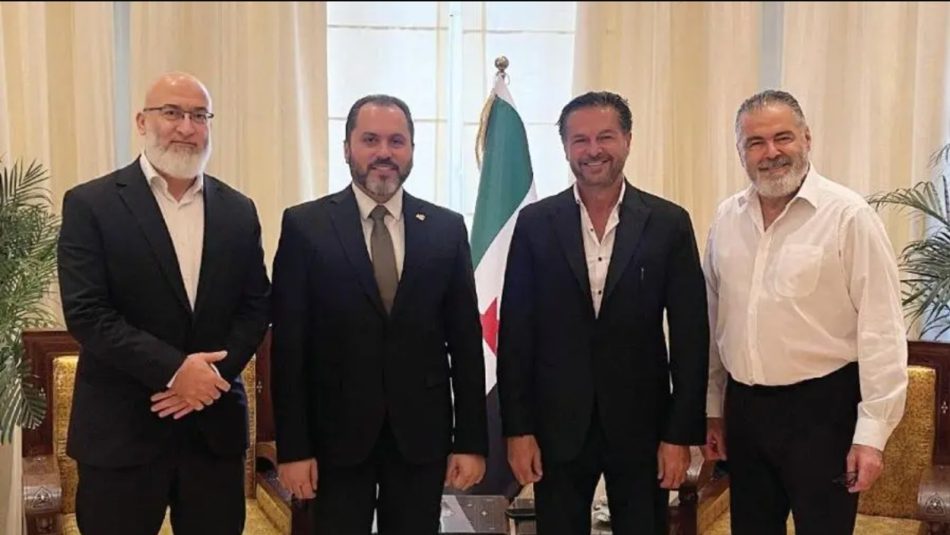
| | - Ragheb's Damascus homecoming: Lebanese superstar Ragheb Alama returned to Damascus after roughly 15 years away, performing at a private wedding and meeting Syria's Minister of Tourism to discuss how cultural events can help revive the country's tourism sector — with talk of a public concert in the coming period, though no date or venue has been confirmed yet.
- Montreal's Lebanese top cop: Fady Dagher, born to Lebanese parents and raised in Abidjan, has become one of Canada's most celebrated police chiefs — leading Montreal's 29-station force with a community-first philosophy that saw Longueuil's shootings drop to just 3 in a year. He still wears a Saint Charbel rosary and keeps a water jug from Bikfaya on his desk.
- Tripoli through a teenager's eyes: Lebanese historian Khalid Ziyadeh's new memoir, "The Unique Sixties Decade," published by Riad El-Rayyes Books, weaves personal coming-of-age stories with sweeping global history, mapping how the Cuban Missile Crisis and Arab nationalism landed in the markets and cafés of Tripoli — all filtered through the eyes of one curious, leftist-leaning boy.
- PSG's European treble beckons: Back-to-back Champions League winners Paris Saint-Germain claimed the UEFA Super Cup, with Désiré Doué scoring the winner against Aston Villa in Salzburg — though the night's real headline was 17-year-old Brian Madjo becoming the competition's youngest ever scorer with a stunning half-volley for Villa.
|
|
Go tell someone something good today — that's what we're here for. |
The kanun is a large zither. |
Lebanon news, every weekday morning. Free, sharp, ~5 minutes. |
|
|
|
|