|   | Sabah el kheir. Lebanon just made history overnight — parliament voted to abolish the death penalty, becoming the first country in the Middle East to do it officially. Meanwhile, Rome talks produced a September roadmap, and a single hilltop called Ali al-Taher is quietly holding all of it hostage. |
|
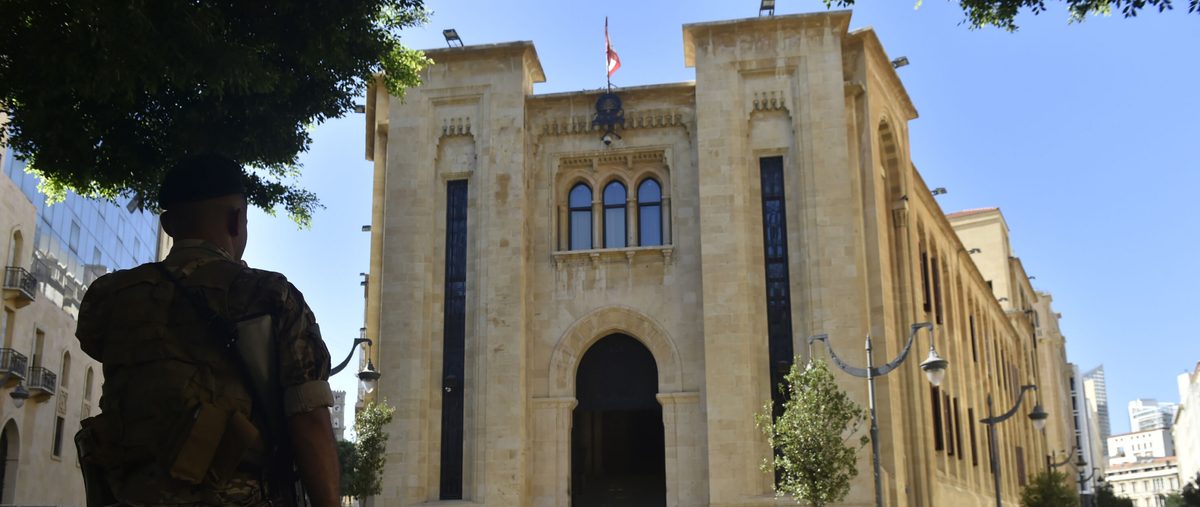
| | Lebanon Becomes the First Middle Eastern Country to Abolish the Death PenaltyIt's done. Parliament voted Tuesday to formally abolish the death penalty — converting what had been a de facto moratorium since 2004 into an actual law. As we've reported through committee votes in July, the bill now heads to the president for signature, and Lebanon becomes the first country in the Middle East to make abolition official.
- The law passed by a majority of Lebanon's 128-member parliament, with the Hezbollah bloc the notable exception — no statement from the party explained why.
- The final text, amended during the session, creates a two-tier system: existing death sentences (covering 85 people still on death row as of January 2026) are commuted to life imprisonment, while crimes committed after the law takes effect face "aggravated hard labor for life."
- That second category immediately drew objections: MP Nabil Badr called "aggravated hard labor" an invented penalty not recognized under Lebanese law, and rights groups flagged that hard labor rarely gets enforced anyway due to prison overcrowding.
- Lebanon will be the 114th country to abolish the death penalty for all crimes, and the second Arab nation after Djibouti, once the law is published in the Official Gazette.
What to watch: Whether the president signs quickly and whether parliament's ongoing general amnesty debate — which could reduce sentences for convicted militants — reshapes what this abolition means in practice. Rome Talks Produce a Roadmap — and a September Date for the Political TrackThe latest round of Lebanese-Israeli negotiations in Rome, which we covered as it unfolded, has yielded two concrete results: a military roadmap for opening new "pilot areas" in the south, and a confirmed date to restart the political track in early September.
- Military delegations from Lebanon, Israel, and the US agreed on the roadmap; Lebanon will present detailed maps of the areas in the next round.
- Washington wants the existing pilot areas to succeed before any expansion — reconstruction was discussed, the official said, "in due course."
- Who verifies Hezbollah's disarmament in the south remains unresolved; discussions are ongoing to identify which third party takes on that role.
Zooming out: The September political-track restart gives both sides a narrow window to close gaps on withdrawal sequencing before domestic pressures on each side complicate the picture further. Ali al-Taher Is Holding the Negotiations HostageA single hilltop north of the Litani River is threatening to blow up the entire negotiation framework. Israel is demanding the Lebanese army enter Ali al-Taher and remove besieged Hezbollah fighters from its tunnels — rather than discuss a second Israeli withdrawal from a new experimental zone. Beirut is considering suspending its participation if Israel doesn't change course.
- The Lebanese army has signaled it won't enter without a clear political decision, unwilling to risk an internal confrontation over a matter the government hasn't formally addressed.
- Israeli forces have already destroyed parts of the tunnel network and closed some entrances, but do not hold fixed posts on the hill — retired General Johnny Khalaf tells Al-Modon that Israel occupies Ali al-Taher "by fire," not by physical presence.
- For Hezbollah, the hill's symbolic value may exceed its military one: a site that "has not fallen" becomes a narrative of resistance to present to its base after far larger losses, including Israeli military control over parts of roughly 55 to 60 border villages.
The bigger picture: Khalaf warns that even if Ali al-Taher falls, Netanyahu's stated policy of acting against any Hezbollah presence on strategic heights means this is likely a waypoint, not an endpoint, for Israeli military objectives in the south. |
|
as of 2:34 AM GMT · Source: Polymarket |
When did Fairuz release the song "Li Beirut"? | Before the civil war (early 1960s) |
| | During the civil war (1980s) |
| | |
Scroll to the bottom for the answer — or play all 10 at sobhiye.news/games/trivia |
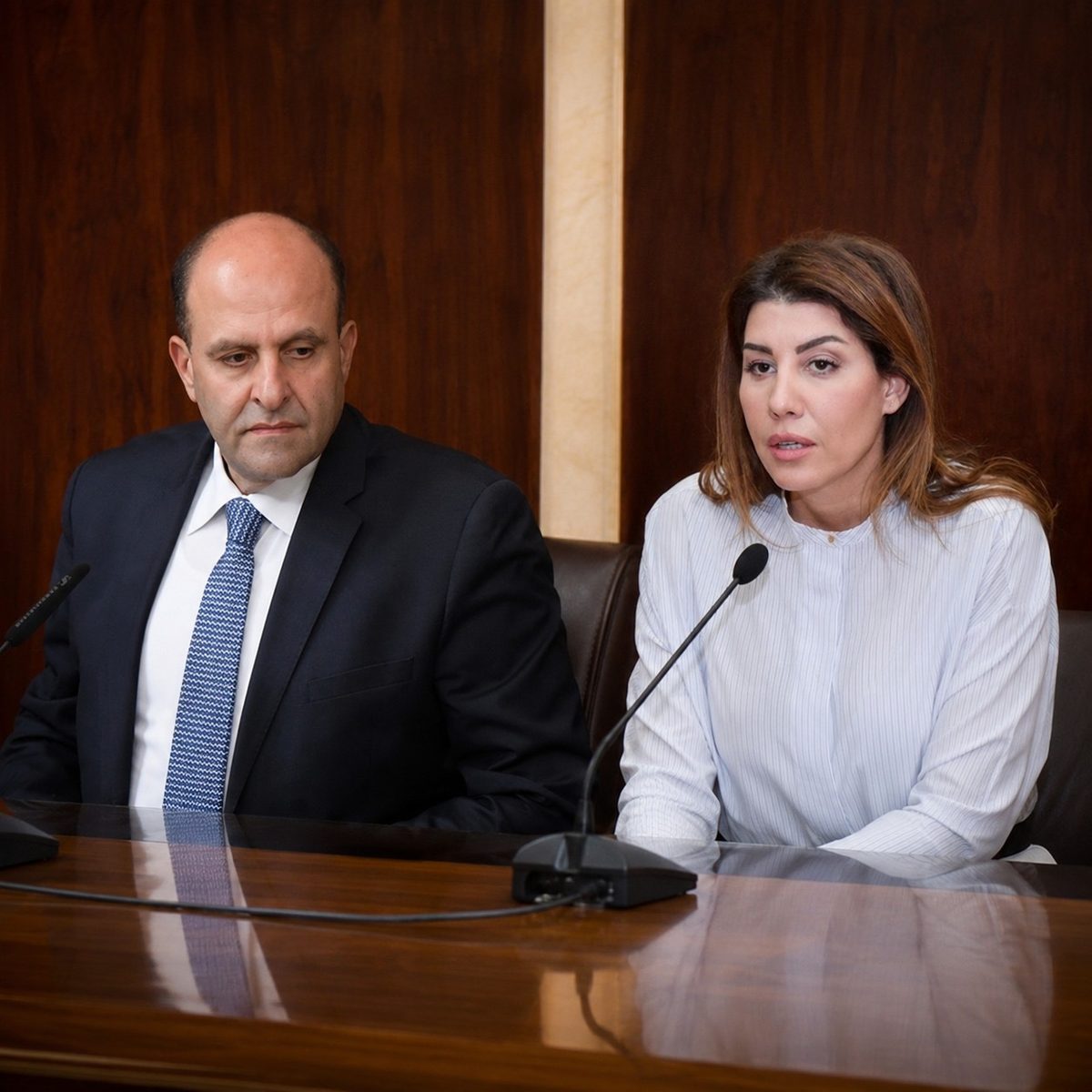
| | - Parliament's messiest day: The legislative session debating the general amnesty law descended into a full shouting match, with MP Paula Yacoubian firing "peace be upon your mother" at MP Salim Aoun after he mocked her name — Nabih Berri eventually left the chamber entirely.
- 16 years, one loophole: Lebanon's long-awaited media law — replacing press legislation from 1962 — heads to a full parliamentary vote this week, but Article 104 still threatens journalists with up to three years in prison for vaguely defined "false and malicious news," undermining the law's core civil-liability reform.
- Drone on ambulance: An Israeli drone struck ambulance teams in Nabatieh in two successive strikes Tuesday — the second hit rescuers who had arrived to help the first attack's wounded — damaging vehicles and injuring two civilians, according to Lebanon's Ministry of Health.
- Farms need a visa: Lebanon's Agriculture Ministry struck a memorandum of understanding with Syria to resolve export problems blocking Lebanese produce from reaching Arab markets, with a follow-up meeting with Jordan scheduled for September 15.
- UNIFIL plants trees: Marking 20 years since UN Resolution 1701, UNIFIL's Force Commander held a ceremony in Naqoura honoring seven peacekeepers killed in recent months — part of 346 total UNIFIL deaths since 1978 — and called the resolution "more vital than ever" amid the ongoing south Lebanon standoff.
|
|
| ─ | Parallel Rate | 89,550 LBP | 0.00% | | ─ | Official Rate | 89,500 LBP | 0.00% | | ▲ | Gold | $4,453.9 | +2.11% | | ▼ | Bitcoin | $63,809 | -0.33% | | ▼ | S&P 500 | 7,728.2 | -0.38% |
as of 2:14 AM GMT · Source: lbprate, BDL, Yahoo Finance, CoinGecko |
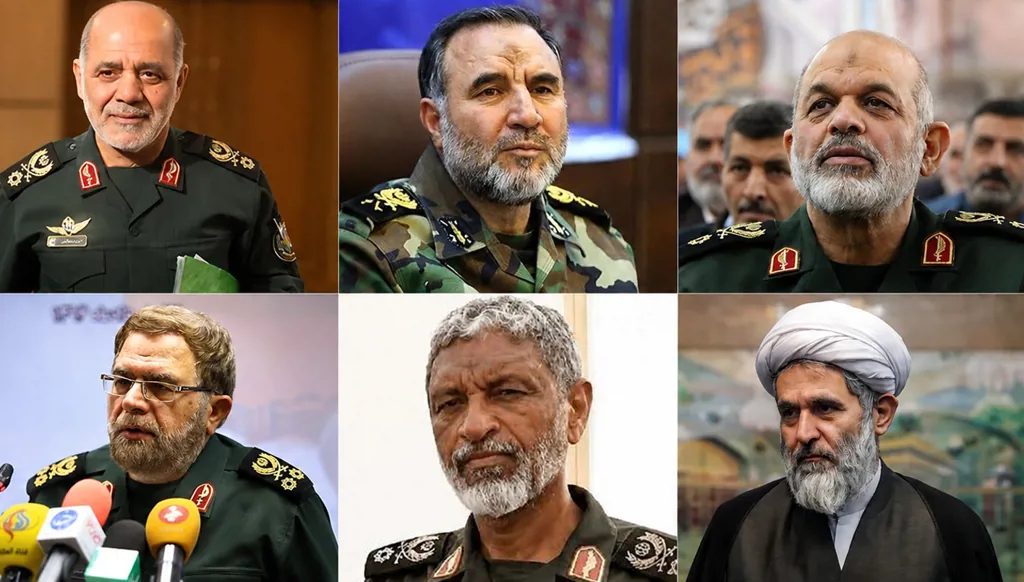
| | Iran Overhauls Its Entire Military Command in One DayTehran issued six military appointments in a single day, reshaping every tier of its armed forces — from the General Staff to the IRGC Navy — in what analysts read as a direct response to intelligence failures and battlefield losses during the ongoing confrontation with the US and Israel.
- The reshuffle placed Ali Abdollahi at the top of the General Staff, with a specific mandate to integrate it with the Central Khatam al-Anbiya Headquarters — merging planning and battlefield execution into a single command chain, according to Annahar.
- Ahmad Vahidi, a founding-generation IRGC figure who previously led the Quds Force's predecessor unit and served as both Defense and Interior minister, was appointed commander-in-chief of the IRGC.
- Hossein Taeb, former IRGC intelligence chief, returns to lead the Basij — tasked with expanding its internal intelligence network after precision strikes revealed the depth of enemy penetration inside Iran.
- A new IRGC Navy commander takes charge specifically to tighten control over the Strait of Hormuz, where navigation negotiations with Washington are ongoing.
What to watch: Whether the integration of Iran's command structure accelerates decision-making or signals that Tehran expects the confrontation to intensify before any negotiated settlement on Hormuz navigation takes shape. Colombia's Earthquake Death Toll Climbs Past 160 as Cities ReelA magnitude 7.4 earthquake struck near San José del Palmar in Colombia's Chocó region Monday morning, killing more than 160 people and collapsing buildings across multiple major cities — with rescuers still pulling survivors from rubble and officials warning the toll will rise.
- The worst-hit cities include Cali, Manizales and Pereira; a major hospital collapsed in Cali, forcing hundreds of patients to be treated in the streets.
- President Abelardo De La Espriella, just three days into his term, declared a national emergency and was urged by lawmakers to also declare an economic emergency.
- Research on Colombian building practices helps explain the scale of the collapse: many buildings use thin concrete walls — typically 7 to 10 centimetres thick — with a single layer of brittle steel reinforcement that fails under significant ground shaking, a standard practice across the Latin American region.
- A 2018 survey of nine buildings in Cali found 90% had walls with a single reinforcement layer.
The bigger picture: The structural vulnerability on display in Colombia mirrors building stock in cities across Latin America and parts of Australia built before modern seismic codes, raising the question of whether construction reform will follow the headlines. Ebola Has Killed More Than 2,000 in DR Congo — and the Peak Hasn't Come YetThe Democratic Republic of Congo is battling a significant Ebola surge. The current outbreak, caused by the rare Bundibugyo strain for which no approved vaccine exists, has recorded more than 4,380 infections and more than 2,000 deaths since being declared on May 15 — and health authorities say the worst is still ahead.
- The case fatality rate stands at 45.9%, higher than the 39.6% recorded in the catastrophic 2014–2016 West African outbreak that killed more than 11,000 people.
- The death toll doubled in just three weeks after taking nine weeks to reach its first 1,000 — a pace that has the WHO's regional director saying authorities are "chasing the virus."
- No approved vaccine exists for the Bundibugyo strain; the WHO has recommended a full-scale human trial of the Ervebo vaccine, with Gavi making 500,000 doses available, though its efficacy against this strain is unproven.
- Security conditions, bad roads, and mass healthcare worker strikes are compounding the logistics challenge in the outbreak's epicenter, Ituri Province.
Zooming out: With contact-tracing falling well below the WHO's 95% target and the health minister confirming the peak has not arrived, the outbreak's trajectory over the next three months remains deeply uncertain. |
|
| - Lebanon's hoops never sleep: The Lebanese basketball league just wrapped a season so competitive it went to a Game Seven between Sagesse and Al Riyadi — and that intensity is fueling Lebanon's national team, which has already qualified for the second round of the 2027 FIBA World Cup Asian Qualifiers, including a dramatic 75–74 win over Qatar in Doha.
- Baalbek at 70, still glowing: With Lebanon's international festivals on pause this year, the Municipality of Ajaltoun refused to let the Baalbek International Festivals' 70th anniversary pass quietly — launching a new artistic production called "Wayna Nay?!" and a full seven-evening cultural program to honor seven decades of one of the Arab world's most iconic stages.
- Arab food's New York moment: From a Lebanese actor who opened one of New York's first falafel shops in the 1960s to today's wave of proudly specific Levantine, Palestinian, and Persian restaurants booking out weeks in advance, the story of Arab cuisine in New York is finally being told on its own terms — and Lebanese roots run through almost all of it.
- Eclipse trilogy begins today: Spain kicks off an extraordinary run of three solar eclipses between now and January 2028 — starting with today's total eclipse sweeping from Galicia to the Balearic Islands — a combination so rare that a total eclipse hasn't crossed the Iberian Peninsula since 1912.
|
|
That's Wednesday wrapped — find something beautiful to look up at today. |
| ✓B. During the civil war (1980s) |
"Li Beirut" (1984) set the poet Joseph Harb's words to Joaquín Rodrigo's "Concierto de Aranjuez" (arranged by Ziad Rahbani), and became an anthem of hope for the city during the civil war. |
Lebanon news, every weekday morning. Free, sharp, ~5 minutes. |
|
|
|
|