|   | Ahla w sahla. Washington is running shuttle diplomacy between Beirut and Tel Aviv before anyone even sits down for round eight — while in the south, a battlefield could quietly rewrite the whole agenda. And closer to home: one woman keeps getting hauled into interrogation rooms for exposing animal abuse, which tells you just about everything you need to know about where Lebanon's priorities still are. |
|
| | US Shuttle Diplomacy Heats Up Before the Eighth Round — and a Battlefield in the South Could Change EverythingLebanese-Israeli negotiations have entered a behind-the-scenes phase: rather than wait for the eighth formal round in early September, Washington is launching shuttle diplomacy between Beirut and Tel Aviv now, aiming to pre-cook as many agreements as possible before anyone sits down at the table. Meanwhile, on the ground in southern Lebanon, a separate battle may be quietly reshaping the terms.
- A diplomatic source told Lebanon 24 that the US State Department will conduct intensive shuttle tours between Beirut and Israel — potentially including the Secretary of State — with the goal of narrowing disagreements before the eighth round.
- The aim: arrive at September's session with prior understandings already in place, so the round itself can move fast.
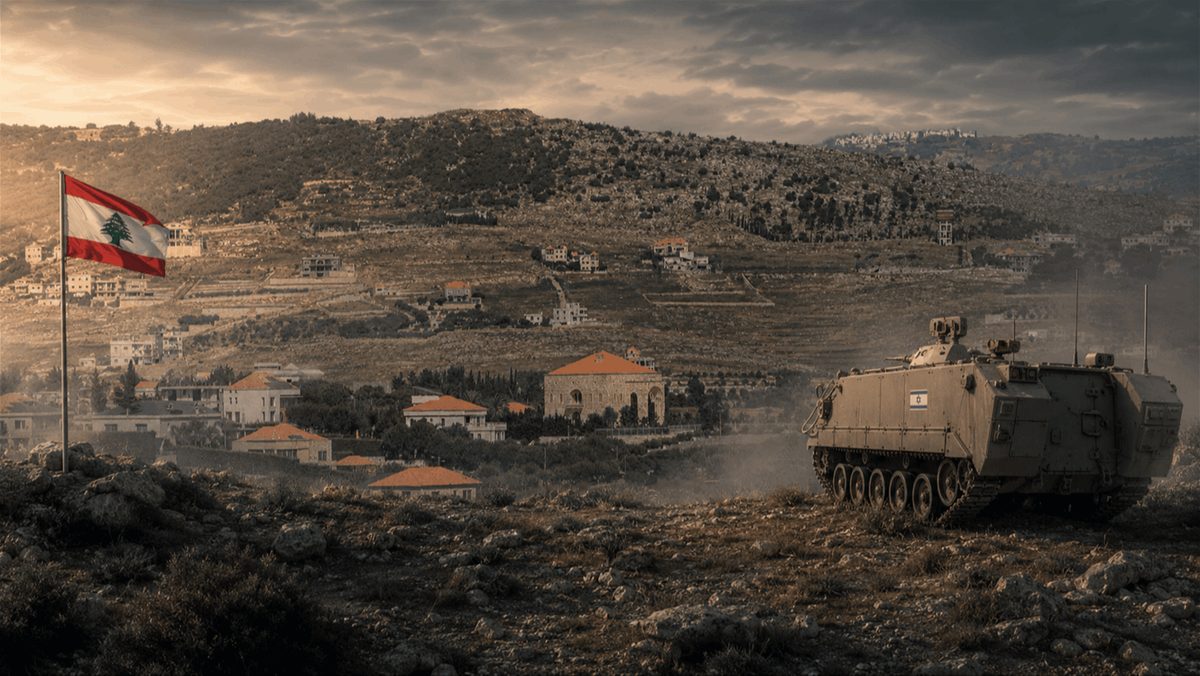
- In parallel, Israeli forces have been operating for weeks in the Ali al-Taher area in southern Lebanon, targeting what Israel describes as Hezbollah's underground tunnel infrastructure — making it one of the most active field confrontation points right now.
- If Ali al-Taher escalates, it could complicate Washington's diplomatic push; if it winds down, it may ease the atmosphere heading into September.
What to watch: Whether the Ali al-Taher battle is contained or expands will be as telling as any diplomatic communiqué about where the eighth round is actually headed. Hezbollah Retreated. The State Still Has to Show Up.The shifting balance of power in Lebanon has created an opening — but openings can close. A sharp analysis in Al Modon asks the uncomfortable question: now that Hezbollah's ability to override the state has weakened, is the Lebanese political class actually building a state, or just redistributing the spoils?
- The piece argues that what has changed in Lebanon so far is mostly the result of external forces — a war, heavy losses, regional transformations — not internal political reform.
- On the ground, the state has regained some security functions and the army's presence has expanded, but the analysis warns: reducing the state's return to its security dimension alone misses the point.
- The real state, the piece argues, is about how power is exercised, how institutions are managed, and whether the law applies equally — and on those fronts, the same sectarian logic of sharing and clientelism appears intact.
- Hezbollah's retreat doesn't produce a state; it merely makes one possible.
Zooming out: The distinction between a change in the balance of power and the actual construction of institutions is the fault line that will define whether Lebanon's current political moment becomes a turning point or just another reshuffle. Lebanon's Animal Rights Activist Keeps Getting Called In for Questioning — for Exposing CrueltyGhina Nahfawi documents animal abuse in Lebanon and posts it publicly. For this, she faces a near-constant cycle of police summonses, interrogations, and defamation complaints — filed by the people she exposes. A Megaphone portrait captures what it looks like to be the one hauled in for questioning while the torturers walk free.
- Nahfawi has faced interrogation at the Bourj Hammoud police station over a video of a puppy being tortured in Dora, detention at Baabda after refusing to delete footage of a dog dragged by a car, and a defamation complaint from the mayor of Sawfar over comments on a municipality post about dogs that "disappeared."
- She was also summoned by the Cybercrime Bureau after exposing a restaurant owner in Bhamdoun for publicly crucifying a gazelle.
- Megaphone's piece frames her Instagram page as a "museum of human cruelty" — and situates her within a wider shadow network of shelter owners, feeders, and defenders who have become, literally, the voice of the voiceless.
Why it matters: Lebanon has no shortage of people fighting for justice in high-stakes arenas, but Nahfawi's story is a reminder that even the most basic protections — for animals, for those who defend them — still have to be fought for one police summons at a time. |
|
as of 2:28 AM GMT · Source: Polymarket |
| |
- $150 million for less paperwork: Finance Minister Yassine Jaber signed a $150 million World Bank agreement to digitize Lebanon's public administration — the World Bank's new regional director called Lebanese leaders' consensus on reform priorities "clear" and plans to be in Beirut at least one week every month.
- Salameh's bill gets bigger: Former central bank governor Riad Salameh and ex-Bank Audi chairman Samir Hanna have been formally indicted for embezzlement and illicit enrichment — the first time a commercial banker has been charged in a Salameh-linked case — with prosecutors accusing Hanna of having bribed Salameh during his three-decade tenure.
- UNIFIL's replacement takes shape: Consultations are moving toward a new international force to verify implementation of model zones in the south — significantly smaller than UNIFIL's 15,000 personnel, potentially under Italian command, with a new UN Security Council resolution expected to replace the 1701 framework, and France explicitly excluded at Washington's insistence.
- Map deleted, ambitions noted: Israel's Foreign Ministry removed a map from its X account that showed parts of southern Lebanon inside Israeli borders, after Lebanon's ambassador to Washington contacted the US State Department — the map had been posted alongside child malnutrition data before sparking widespread controversy.
- Chouf's forests on fire: Wildfires broke out in Botmeh in the Chouf district and Mish Mish in Akkar during the ongoing heatwave, damaging pine trees, olive groves, and harvested wheat fields — firefighting aircraft and civil defense teams are still battling the Chouf blaze, which reignited Monday afternoon and is approaching residential areas.
|
|
| ─ | Parallel Rate | 89,600 LBP | 0.00% | | ─ | Official Rate | 89,500 LBP | 0.00% | | ▲ | Gold | $4,488.9 | +1.57% | | ▼ | Bitcoin | $64,004 | -1.68% | | ▲ | S&P 500 | 7,753.11 | +0.56% |
as of 2:03 AM GMT · Source: lbprate, BDL, Yahoo Finance, CoinGecko |
| | Turkey's Parliament Passes Historic Law to Absorb PKK Members — Ending a 40-Year Conflict on PaperTurkey's parliament just took the most concrete legal step yet toward closing a conflict that has killed more than 40,000 people since 1984. A new law establishes protections for former PKK militants and a path to reintegrate them into society — turning what was a political declaration into actual legislation.
- The law passed 468 to 600 votes in parliament, backed by Erdogan's AK Party, nationalist MHP allies, and the pro-Kurdish DEM Party.
- It provides legal cover for former militants who didn't commit specific crimes and allows the suspension of prison sentences for some PKK members.
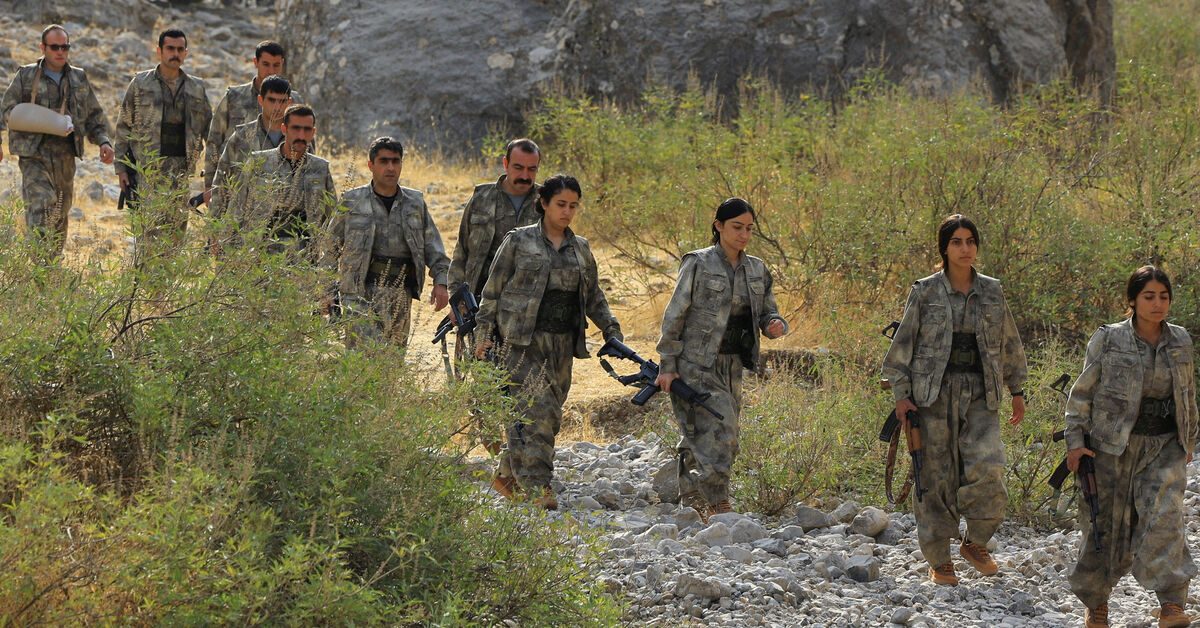
- The PKK announced in May 2025 it would end its armed struggle; a group of militants symbolically burned their weapons in northern Iraq two months later.
- Broader Kurdish demands — expanded political rights, changes to anti-terrorism law, and Ocalan's status — remain unresolved by the legislation.
What to watch: Whether the law's passage accelerates the dismantling of PKK structures on the ground, or whether unresolved demands over Kurdish political rights stall what's been called Ankara's goal of a "terror-free Turkey." Russia Hands Over Its Syrian Bases — and Walks Away from a Decade of Military PresenceRussia is giving up direct control of its two most strategically significant Mediterranean military installations: the Hmeimem air base and the Tartus naval base in Syria. The bases, which kept Russia's war machine running through Syria's civil war, will now transition to Syrian administration under a new bilateral deal.
- Under the agreement, Syria will assume control of Hmeimem and the commercial berth at Tartus port, with both military facilities transitioning into joint Syrian-Russian training centers.
- Russia's military presence in Syria had persisted after Assad's December 2024 ouster — these bases were the last significant holdout.
- Syria's foreign ministry called this "the most significant development since negotiations began approximately a year and a half ago."
- Moscow has not yet issued a formal comment on the deal.
Zooming out: Russia's withdrawal from direct control of its only Mediterranean naval facility marks a measurable reduction in its military footprint in the eastern Mediterranean, reshaping the regional balance at a moment when Syria is simultaneously rebuilding ties with the US, Europe, and Arab neighbors. Red Sea Cable Repairs Now Take Over 50 Days on Average — and the Delays Remain SignificantSubmarine internet cables carry the vast majority of the world's digital traffic, and the Red Sea corridor — one of the most critical chokepoints — has become the slowest place on earth to get a cut cable fixed. A July 2026 report from the International Cable Protection Committee puts hard numbers on a problem that's been building for years.
- The global average gap between calling a repair ship and it beginning work has exceeded 50 days, with the Red Sea ranked slowest worldwide — more than double the average recorded in 2012, according to data obtained by Annahar.
- Permit delays surged to around 18 days in 2025, up from around 9 days in 2024, while ship availability delays fell but were no longer the larger overall factor in 2025.
- There is no cable repair ship based within the Red Sea itself — the closest vessels are in Salalah and Fujairah.
- Maintaining current service levels globally would require roughly $3 billion and 20 new ships, according to TeleGeography estimates.
The bigger picture: As conflict, sanctions checks, and insurance restrictions pile onto an already stretched repair infrastructure, the world's digital backbone in one of its busiest shipping lanes is becoming harder — and slower — to fix each year. |
|
| |
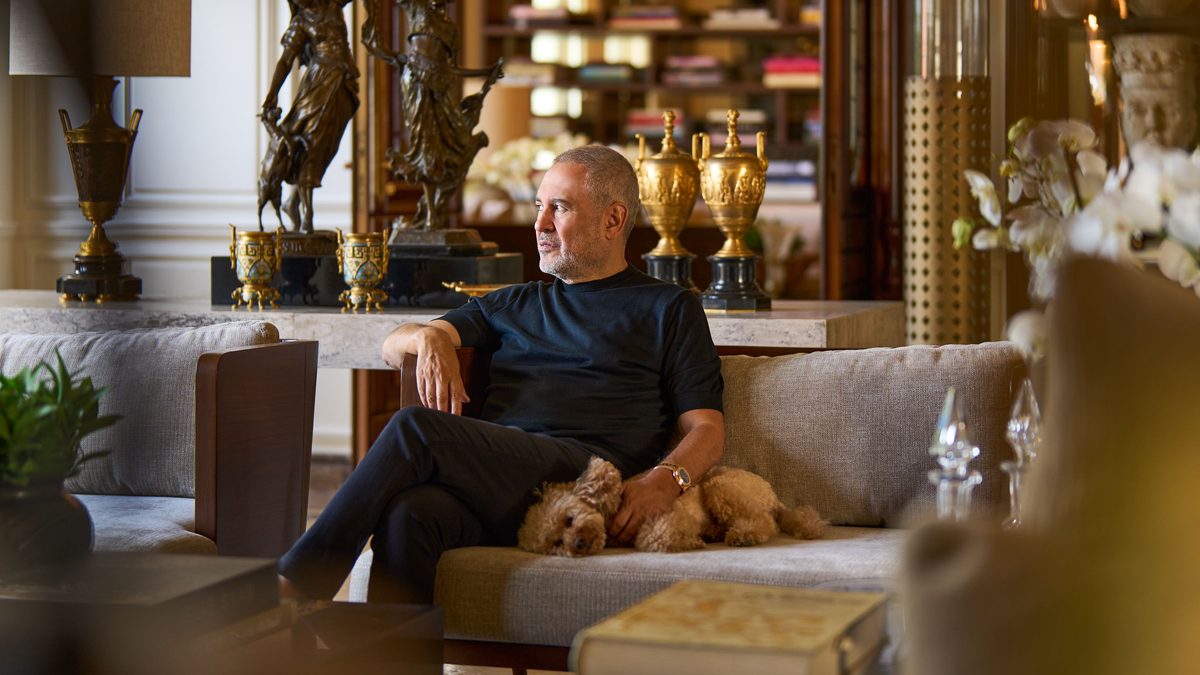
- Elie Saab's open door: Lebanese couturier Elie Saab opened his nearly 900-square-metre Achrafieh home to Architectural Digest, a layered Beirut apartment opposite Sursock Palace filled with Phoenician ceramics, Ottoman antiques, and French chandeliers — built almost entirely by Lebanese craftsmen, and lived in with the philosophy that "al-bayt maftouh" — my home is always open.
- Lebanese roots, Arabic novel: Forget what your literature teacher told you — the first Arabic novel wasn't Egyptian: it was written in 1906 in New York by Lebanese writer Afifa Karam from Amchit, a journalist and women's rights activist who preceded Kahlil Gibran and every "Mahjar" writer of her era, beating the long-credited Egyptian author by nearly a decade.
- Habibi City is real: New York Magazine chronicles how SWANA culture — Arab, Iranian, Afghan, and Lebanese — has gone from Bay Ridge basements to sold-out restaurants, packed bookstores, and the mayor's office, with Lebanese-rooted spaces like Storm Books and Sawa in Park Slope now anchoring a diaspora scene that younger New Yorkers of all backgrounds are actively seeking out.
- Cambridge to European gold: Britain's Amy Hunt, a 24-year-old Cambridge graduate who once needed her mother to lift her out of the shower after a catastrophic quad injury, powered to the European 100m title in 11.00 seconds — then announced she wants all four gold medals at the championships, because apparently one was just the warm-up.
|
|
Khalas — take a breath, share something that made you smile today, and we'll be back in your inbox tomorrow morning. |
Awarma is preserved lamb cooked in fat. |
Lebanon news, every weekday morning. Free, sharp, ~5 minutes. |
|
|
|
|